
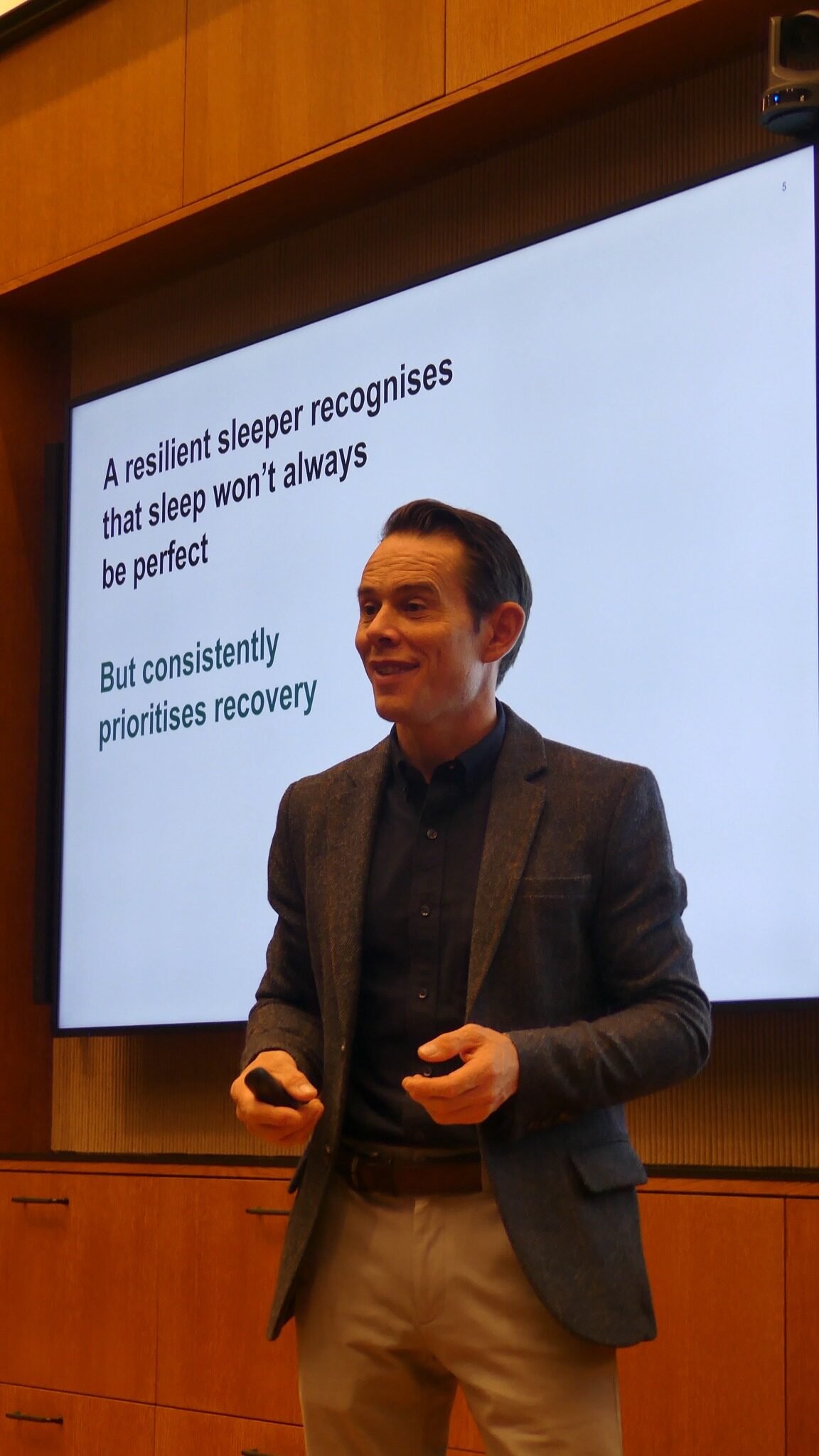
Everyone has bad nights. What sets resilient sleepers apart isn’t that they always sleep well, it’s how they respond when they don’t, and the habits they keep during the day.
1. Protect your rhythm
Getting up at a similar time each day, even after a poor night, strengthens your body clock and makes the next night easier.
2. Get outside early
Morning daylight is one of the most powerful signals for your internal clock. Even ten minutes helps.
3. Build recovery into the day
Short pauses between periods of effort stop stress accumulating and arriving all at once at bedtime.
4. Respond, don’t react
Lying awake is frustrating. Fighting it usually makes it worse. Noticing the thoughts without wrestling with them reduces the snowball effect of night-time worry.
5. Wind down deliberately
You don’t fall asleep, you arrive there. A consistent, calm wind-down routine tells your body the day is done.
Poor sleep is inevitable from time to time. Recovery is a choice we can keep making.